
Introducing BeeSenz — Using IoT & AI to Keep Hives Healthy
Pete Harris
A team of Enterprise Neurosystem volunteers have joined forces with SenzAgro, a Sri Lankan IoT and AI technology innovator, to work on the BeeSenz project, with a mission to help beekeepers maintain healthy hives in the face of significant impacts from climate change.
The project is an early proof-of-concept (PoC) to support the Enterprise Neurosystem’s goal to create a single global sensor and interconnect network that will integrate all climate-related data from a myriad of projects and sources. Artificial intelligence (AI) models will be applied to search for and determine deeper causes and conditions, which in turn will uncover and present new solutions for restoring balance to the environment. More information on the work of the Enterprise Neurosystem can be found here.
For BeeSenz, SenzAgro is developing an open-source, low-cost IoT sensor to determine the queen’s status within a hive. By offering insights into hive health, swarming predictions, and queen emergence, BeeSenz empowers beekeepers to make informed, data-driven decisions to sustain thriving colonies, especially in challenging climates.
In this first blog post in a series, we’ll provide some background on BeeSenz, on queen bees and hives in general, on how climate change is impacting the bee population globally, and on how the volunteer team plans to use technology to mitigate against those impacts. In subsequent blog posts we will delve into more detail on the approach and the technology, and we’ll report on the project’s progress as it happens.
The Busy Bees Involved in BeeSenz

First, we’ll introduce the team working on BeeSenz (some of whom are featured in the photo above):
Dennis O’Connell — a technologist and business development executive at Racklive, a data center infrastructure innovator, who conceived of using smart sensors and AI to monitor bee hive health.
Leo Hoarty — an independent technology development consultant and sensor expert researching bee communications with next generation hive monitoring solutions.
Dr. Noah Wilson-Rich — a renowned bee scientist, founder of the Urban Bee Lab and The Best Bees Company. Noah plays a key role in promoting the sensor’s applications to both scientific and commercial audiences.
Ryan Coffee — a scientist with a focus on combining sensor devices with machine learning.
Ruban Kanapathippillai — an entrepreneur and business leader from Sri Lanka who is sponsoring some of the early R&D and who is interested in the sensor’s use on a global scale.
Miller Alexander Rajendran — leader of the SenzAgro Team who works at the forefront of agricultural technology, developing affordable sensor and software solutions to detect queen bees and external threats to hives.
Why Everyone Should Care About Bees and Especially The Queen
You probably know that bees make honey, which should be enough of a reason to ensure that they thrive. But bees are so much more than producers of a delicious natural sweetener. The fact is, the world pretty much depends on the existence of bees in order to survive.
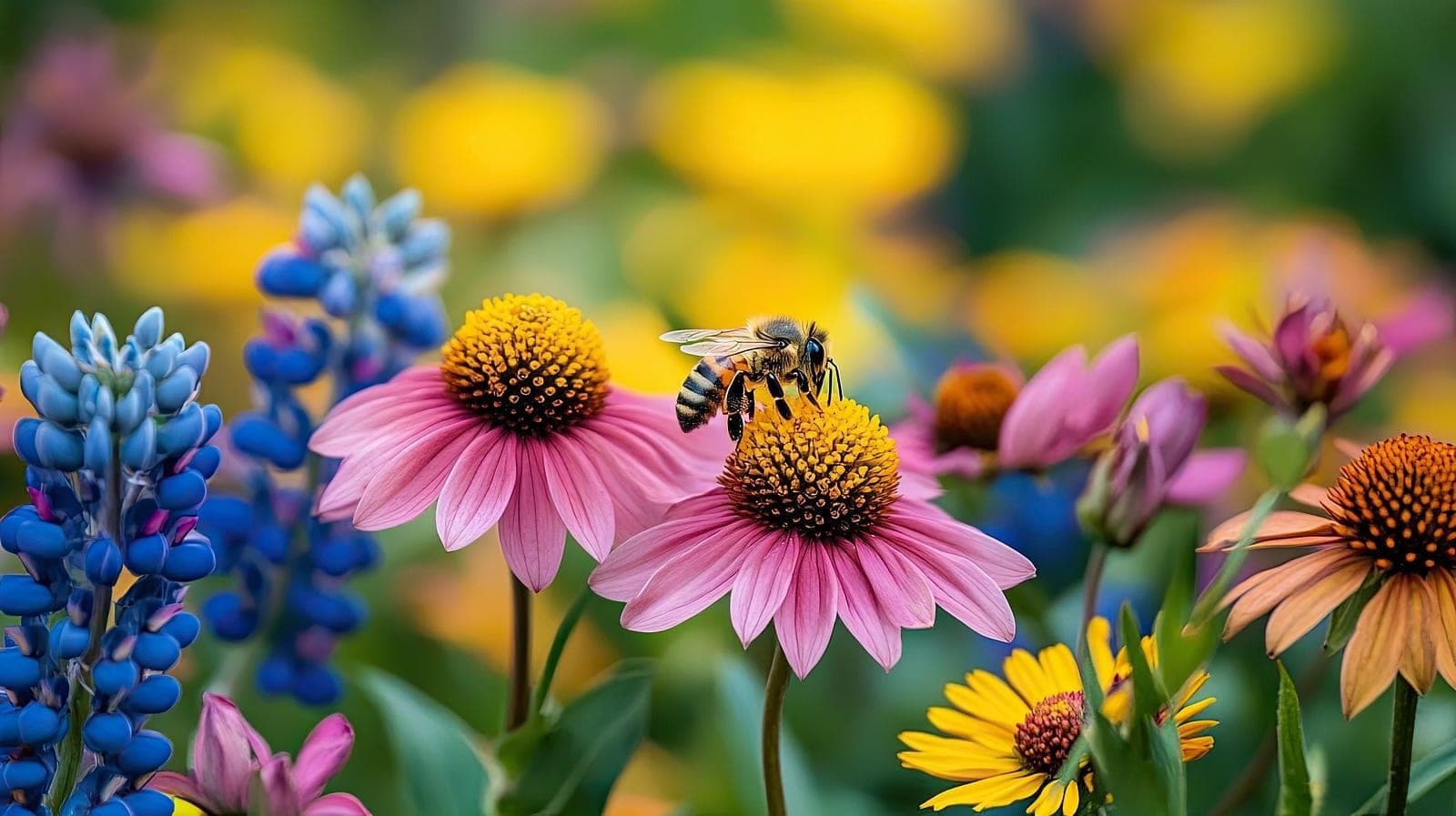
Bees are pollinators. As they move from flower to flower to collect nectar and pollen to provide food for their hives, they are inadvertently engaging in pollination.
Pollination — the transport of pollen from the male organs (stamens) of a flower to the female organs (pistils) of another flower of the same type — leads to fertilization and the creation of seeds for reproduction.
While pollination seems like a hit-or-miss activity, it is actually very effective. Many flowering plants depend on bees to reproduce, and the United Nations estimates that 75% of fruit and seed crops benefit from pollination. In the U.S., honey bee colonies are responsible for pollinating more than a third of the nation’s crops, contributing more than $15 billion annually to the economy.
As for the queen, so plant reproduction depends on bees, and bees themselves hatch from eggs that are laid only by the queen in the hive (around 2,000 per day). Connecting the dots, a hive without a queen means no bees and no bees means no pollination and so no plant reproduction. Which leads eventually to no plants!
For more information about the importance of bees, see here. And for those that want to know more about queen bees and their role, see here.
How Climate Change is Impacting Bees and Hives
Bees have existed for a hundred million years (we know this because fossil bees from the Cretaceous period have been found encapsulated in amber). But this century — just 25 years old — has been very challenging for their survival. For example, the American bumblebee population has declined by a massive 90% since the year 2000, driven by pesticide use, habitat loss, and climate change impacts.
Habitat loss and climate change are connected. Higher temperatures and changing weather patterns have caused a substantial increase in wildfires and flooding around the world, and with these impacts comes the destruction of natural bee habitats.
Increases in temperature have also directly impacted many bees that prefer a colder climate, forcing them to migrate to areas where pollination may be more challenging.
Also, temperature increases have reduced access to water that both plants and bees need to survive. Plants without water are less likely to sprout and also produce less nectar, which impacts the pollination process.
About SenzAgro and BeeSenz
Founded in 2015. SenzAgro is a leader in precision agriculture technologies. It creates solutions that optimize sustainable productivity by enabling growers to cost efficiently produce higher yields, while using fewer resources — water, land, and energy.
Work on BeeSenz began in 2024. The project’s ultimate goal is to create an affordable and practical solution that beekeepers worldwide can adopt. It incorporates IoT sensors designed to monitor the presence of a queen within a hive.
The BeeSenz project consists of several clear phases to ensure a smooth path to deployment.
Phase one is already complete. It involved collecting acoustic data from hives to identify the unique patterns that indicate whether a queen bee is present.
Phase two, which is underway now, involves using this acoustic data to train and fine-tune machine learning models to ensure they can accurately detect the queen’s presence.
Phase three will focus on the development of low-cost, energy-efficient sensor prototypes and testing them in controlled environments to make sure they work as expected.
Phase four will involve deploying sensors in real-world hives as part of field trials to see how they perform under different conditions. This phase will also gather feedback from beekeepers to guide improvements.
Finally, during phase five, the sensors will be optimized for mass production and user friendliness, while an easy-to-use app for beekeepers and documentation/training resources will be created.
If all goes well, BeeSenz will then be ready for formal launch and deployment on a global scale.
Stay tuned for further updates!